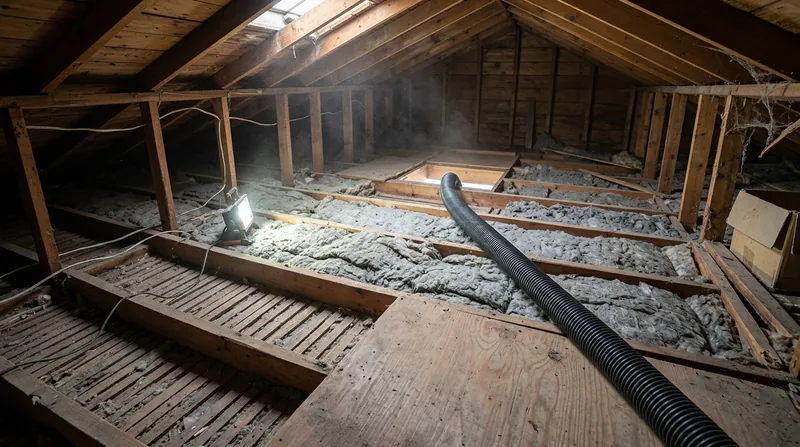




Insulation Removal in Rapid City is the critical first step before any spray foam retrofit. Rapid City sits where the Black Hills meet the open plains, and most homes here rest on poured basements carved into hillsides, with attics that bake to 95°F in summer and face 20-below cold snaps in winter. Many of these homes carry failed fiberglass batts, deteriorated cellulose, or old foam that has collapsed or absorbed moisture over decades. Before we install new spray foam in your attic, crawl space, rim joist, or garage, we remove the old insulation completely, dispose of it responsibly, and prepare a clean substrate for the work ahead. This is not demolition work, it is precision removal that protects your home and sets up the right conditions for durable, effective insulation.
Why Insulation Removal Matters in Rapid City's Climate
The high country and plains climate of Greater Rapid City creates two distinct failure modes for old insulation. Chinook winds swing temperatures 50 degrees in a single day, and warm air leaking into the attic melts snow on the roof that refreezes as ice dams along the eaves. That moisture wicks into fiberglass and cellulose, reducing R-value and promoting mold. In crawl spaces below homes like those in Rapid Valley and Robbinsdale, frost and thaw cycles work moisture deep into batts and rim cavities. In the older balloon-framed homes around West Boulevard and downtown, original attic fill has settled into gaps, leaving uninsulated cavities overhead. Metal buildings and garages on the prairie and around Ellsworth Air Force Base suffer condensation on the steel deck when old insulation fails to control vapor drive. Removing compromised insulation is not optional, it is the foundation of any retrofit that will actually work.
- We extract fiberglass batts, rolls, and blankets without leaving dust or debris in your walls or mechanical spaces.
- We remove settled or matted cellulose completely, which cannot be re-fluffed or salvaged.
- We haul away old spray foam that has absorbed moisture, lost adhesion, or cracked under seasonal movement.
- We dispose of all insulation material in compliance with local waste management rules at your address.
- We leave the substrate clean and dry, ready for new spray foam or other insulation to be installed.
Removing failed insulation before installing new foam ensures that the new system bonds properly, cures without trapping moisture, and performs at its rated R-value for years to come.
Key info: Homes in Box Elder, Spearfish, and Sturgis often carry old fiberglass or cellulose installed before modern air sealing standards. Removing it completely prevents the new foam from bonding over degraded material and eliminates the risk of trapped moisture that causes thermal bridging and mold.
For more detail on what comes after removal, see our pages on attic spray foam insulation and crawl space spray foam insulation.
South Dakota's Department of Labor and Regulation oversees contractor registration and safety compliance. Verify any contractor's standing at https://dlr.sd.gov/ before hiring.
How We Remove Insulation in Rapid City: Step by Step
Insulation removal is not a one-size-all job. The method depends on what is in the space, how accessible it is, whether moisture or contamination is present, and what comes next. We inspect the attic, crawl space, or wall cavity first, identify the material and its condition, and then execute the removal with mechanical ventilation and containment so dust and fibers stay out of your living space and HVAC system. Once the old insulation is out and the substrate is dry, we prepare the surface for new spray foam installation.
- We inspect the space, identify the insulation type and condition, and check for moisture, pest damage, or contamination.
- We set up containment and mechanical exhaust fans to control dust and airborne particles during removal.
- We remove insulation by hand or with pneumatic equipment, depending on the material and the space geometry.
- We bag and haul away all removed material to a licensed disposal facility.
- We sweep and vacuum the substrate, removing loose debris and dust.
- We allow the space to dry fully before any new insulation is installed or any sealing work begins.
This systematic approach ensures that your home is not re-contaminated during the removal process and that the new spray foam installation will have a clean, sound substrate to bond to.
Example: A 1960s ranch in Robbinsdale has original fiberglass batts in the attic that have settled and compacted over fifty years. We remove all batts, vacuum the floor and rim cavities, inspect the roof deck for leaks, and dry the space. Once dry, we install closed cell spray foam to seal rim joists and band joists, then open cell foam in the attic to R-38 or higher, depending on your local code and climate zone.
See our detailed guide to insulation replacement and re-insulation for the full process from removal through new installation.
Insulation Removal Methods and Materials
| Approach | Description | Best for |
|---|---|---|
| Fiberglass batt and roll removal | Hand removal of batts from joists and cavities, with dust containment and vacuum collection. | Attics and wall cavities in homes built 1950s-1990s; settles and loses R-value over time. |
| Blown-in cellulose removal | Pneumatic extraction of settled cellulose with high-volume vacuum and containment ductwork. | Attics with compacted cellulose; absorbs moisture and loses R-value in Rapid City's dry-cold winters. |
| Old spray foam removal | Mechanical cutting and extraction of failed or moisture-logged foam, followed by substrate cleaning. | Attics and crawl spaces where prior foam has absorbed water or lost adhesion. |
| Rim and band joist cleanup | Removal of batts or foam from rim cavities, with inspection and drying of the band board and rim joist. | Basement rim joists in poured-basement homes; frost and thaw cycles work moisture into old insulation. |
| Crawl space insulation removal | Extraction of batts, blankets, or old foam from crawl spaces, with moisture assessment and substrate prep. | Crawl spaces under seasonal cabins in the Hills (Deadwood, Lead, Hill City) and under ranch homes on the prairie. |
Each method is tailored to the material, the space, and the climate conditions that caused the insulation to fail. We inspect first, choose the right technique, and execute with mechanical ventilation and containment so your home stays clean.
Insulation Removal Cost in Rapid City: What to Expect
The cost of insulation removal in Rapid City depends on several concrete factors: the size of the space (attic square footage, crawl space dimensions), the type and condition of the material (fiberglass, cellulose, old foam), how accessible it is, and whether the substrate is dry or requires drying time before new insulation goes in. A straightforward attic removal in a smaller home starts at $950. A larger home with multiple areas to clear, or a crawl space with moisture and compacted material, runs higher. Removal of old spray foam that has absorbed water or failed is more labor-intensive and costs more than pulling batts.
- Smaller attic removal (under 1,000 sq ft) typically starts at $950 and covers labor, containment, and disposal.
- Larger attic or multi-zone removal (1,000 to 2,000 sq ft) scales with square footage and material type.
- Crawl space removal is priced on the footprint, accessibility, and condition of the existing insulation.
- Failed foam removal costs more because it requires cutting, extraction, and often substrate drying before new foam can be installed.
- A free estimate on site lets us assess the exact scope and give you a firm number before work begins.
The best way to understand what your removal will cost is to call us at (605) 519-6148 for a free, no-obligation estimate. We inspect the space, identify the material and condition, and quote the labor and disposal based on what we actually see. We also explain what happens next: whether the substrate needs to dry, what new insulation makes sense for your climate and home, and how the retrofit will improve your comfort and energy performance. See our full pricing overview for ranges across all our services.
Insulation Removal Near Me: What Rapid City Homeowners Should Know When Hiring
Hiring the right contractor for insulation removal is as important as the removal itself. A bad removal leaves dust in your ductwork, loose debris in wall cavities, or a damp substrate that dooms the next insulation job. When you are looking for an insulation removal contractor near Rapid City or in Box Elder, Spearfish, Sturgis, Deadwood, or anywhere else in Greater Rapid City, here is what to verify and ask about.
- Confirm that the contractor is fully insured and can provide a current certificate of insurance before work starts.
- Ask for references from recent removal jobs in your neighborhood or in a similar home type (1950s ranch, newer two-story, log cabin, or metal building).
- Request a written estimate that specifies the square footage, material type, containment method, disposal plan, and labor cost, with no surprises at the invoice.
- Understand what happens if moisture is found: a professional will pause, dry the substrate, and explain the cost of drying before new insulation is installed.
- Check whether your HOA or local building code requires a permit for removal work, especially in Summerset, Rapid Valley, or other master-planned areas where architectural review may apply.
- Ask about the re-entry window after removal and before new foam is sprayed, and confirm that the space will be properly ventilated during the cure phase of any new installation.
A local contractor with a local address and years of experience in Rapid City's climate and building stock is the strongest choice. We have been in business since 2012, we know the homes and the weather patterns that cause insulation to fail, and we stand behind our work with a warranty on our installation. Call us at (605) 519-6148 or visit our contact page to schedule your free estimate today.
Insulation Removal in Rapid City: Pricing Guide
| Service | Price | Details |
|---|---|---|
| Attic insulation removal (under 1,000 sq ft) | Starting at $950 | Includes labor, containment, dust control, vacuum collection, and disposal at licensed facility |
| Larger attic or multi-zone removal (1,000 to 2,000 sq ft) | Starting at $1,400 | Scales with square footage, material type, and accessibility; fiberglass and cellulose priced separately from failed foam |
| Crawl space insulation removal | Starting at $1,200 | Depends on crawl space footprint, headroom, moisture condition, and whether substrate drying is needed before new foam |
| Failed spray foam or complex removal | On estimate | Requires on-site inspection to assess labor, cutting and extraction time, substrate prep, and drying timeline |
| Travel and setup | Included | No separate mileage fee or travel charge within Rapid City and surrounding service areas |
| Free estimate | No cost | Response within 24 hours at (605) 519-6148; no obligation to proceed with removal or new insulation |
Indicative pricing, the exact cost depends on square footage, finish, and site access. Free personalized estimate within 24h at (605) 519-6148.


