Spray Foam vs Blown-In Insulation: The Real Differences
When homeowners in Rapid City start researching attic insulation upgrades, they quickly encounter two dominant options: spray foam and blown-in insulation. Both have legitimate strengths, and understanding how they differ is the first step toward making the right choice for your home.
Attic Spray Foam Insulation comes in two main varieties. Closed Cell Spray Foam Insulation is denser and offers superior moisture resistance and structural support, making it ideal for challenging climates and areas prone to moisture intrusion. Open Cell Spray Foam Insulation is lighter, more flexible, and generally more affordable, though it requires a vapor barrier in certain applications. Blown-in insulation, by contrast, typically consists of fiberglass, cellulose, or mineral wool particles that are pneumatically installed into cavities. It's quick to install and works well as a top-up material.
The key difference comes down to application and performance. Spray foam expands to fill every gap, creating an air seal that blown-in materials cannot match. Blown-in insulation settles over time and can leave small voids if not installed with precision. However, blown-in materials are less expensive upfront and are often the most practical solution when your attic already has some insulation in place.
Spray Foam vs Fiberglass: Which Performs Better in Rapid City Winters
For homeowners specifically comparing spray foam to fiberglass, the choice often hinges on climate and budget. Rapid City experiences cold winters and variable humidity, which makes air sealing particularly valuable. Fiberglass batts and blown-in fiberglass are affordable and easy to understand, but they rely on a continuous air barrier elsewhere in your home to prevent warm air from escaping around the insulation itself.
Spray foam creates that air barrier as it's applied, eliminating the need for additional air sealing measures. This is especially important in older homes or homes with complex roof geometries, where fiberglass alone may not prevent thermal bypass. The R-value per inch is also higher with spray foam, meaning you get better performance in the same or less space. That said, fiberglass remains a solid choice if your attic is already well-sealed and you're simply looking to boost overall R-value without a major renovation.
Blown-In Insulation: When a Top-Up Is the Honest Answer
Here's where we get honest about what many homeowners actually need. If your attic already has 4 to 6 inches of existing insulation and you're not dealing with air leaks, moisture problems, or structural concerns, a blown-in top-up may be exactly the right move. Adding another 4 to 6 inches of blown-in cellulose or fiberglass is quick, non-invasive, and can bring your total R-value up to code at a fraction of the cost of a full spray foam retrofit.
The beauty of blown-in insulation is its flexibility. It conforms to rafters, pipes, and wiring without requiring removal of existing materials. Installation takes a day or less, and your attic remains accessible. If your goal is simply to increase thermal resistance in an already functional attic, blown-in insulation delivers real value. We've worked with many homeowners in Rapid City who started thinking they needed a complete spray foam overhaul, only to discover that a well-executed blown-in top-up was the smarter financial choice for their situation.
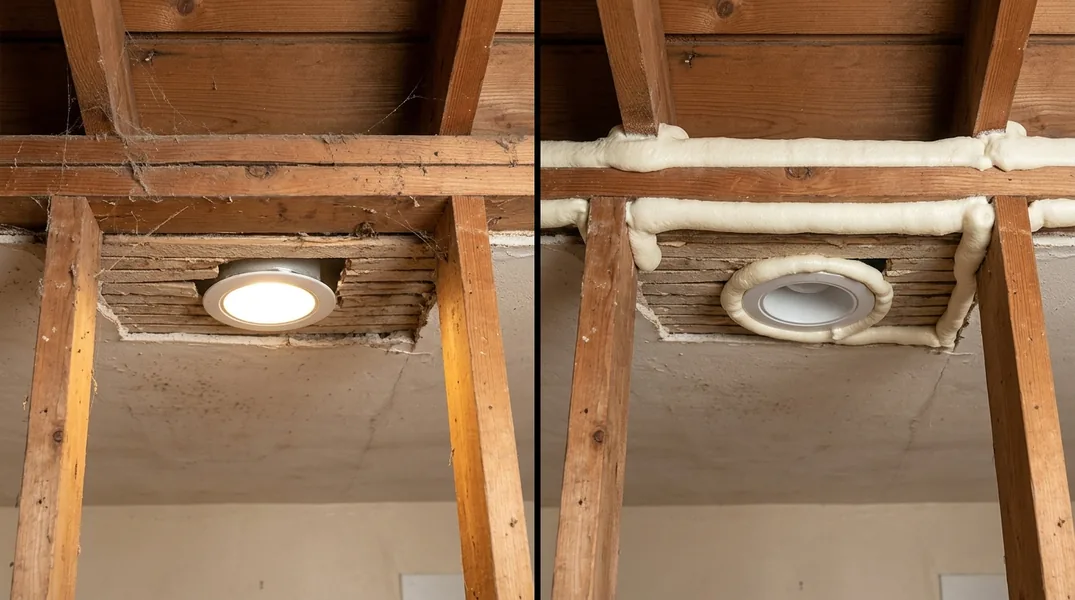
The trade-off is that blown-in materials don't create an air seal the way spray foam does. If your attic has significant air leaks, recessed lights, or gaps around penetrations, blown-in insulation alone won't solve those problems. You'd still need air sealing work, which spray foam handles in one step.
Spray Foam vs Cellulose: R-Value, Durability, and Long-Term Performance
Cellulose is a popular blown-in option made from recycled paper fibers, and it deserves a fair comparison. Cellulose offers a higher R-value per inch than fiberglass (approximately 3.6 versus 3.2), making it attractive for tight spaces. It's also an eco-friendly choice, which resonates with many homeowners. However, cellulose is more prone to settling over time, can absorb moisture if not properly protected, and requires careful installation to avoid voids and compression issues.
Spray foam, whether closed-cell or open-cell, does not settle. It maintains its R-value indefinitely and provides moisture resistance that cellulose cannot match. In a climate like ours, where temperature swings are significant and attic condensation can occur, spray foam's stability and moisture resistance offer long-term peace of mind. The upfront cost is higher, but the performance advantage over 20 to 30 years can justify the investment, especially in larger attics or homes with complex ventilation challenges.
For many homeowners, the choice comes down to immediate budget versus long-term durability. Cellulose is a solid middle ground if your attic is dry, well-ventilated, and you don't mind the possibility of future settling and maintenance.
Best Insulation for Your Attic: A Practical Decision Framework
So what is the best insulation for your attic? The honest answer depends on your current situation, your budget, and your long-term goals. If your attic is uninsulated or severely under-insulated, spray foam delivers the best all-around performance. If your attic already has decent insulation but falls short of current code, blown-in is often the practical choice. If you're concerned about air leaks, moisture, or want maximum performance in a tight space, spray foam wins. If you want to keep costs low and your existing structure is sound, blown-in or cellulose may be sufficient.
The key is getting a professional assessment. Every attic in Rapid City is different. Variables like roof pitch, ventilation, existing insulation type and condition, air sealing needs, and moisture history all influence the best choice. A qualified contractor will evaluate these factors and recommend a solution tailored to your home, not just the most expensive option.
Attic Spray Foam Insulation Cost in Rapid City: What to Budget
Cost is a major factor in this decision, so let's address it directly. Blown-in insulation typically costs less per square foot than spray foam, often ranging from 50 to 70 percent lower. For a simple top-up in a 1,500-square-foot attic, you might spend 800 to 1,500 dollars for blown-in material and labor, versus 2,500 to 4,500 dollars for spray foam. Those numbers vary based on attic size, accessibility, and whether air sealing is needed, so getting a free estimate from a local contractor is essential.
That said, spray foam's higher upfront cost often comes with tangible benefits. Better air sealing means lower heating and cooling costs year-round. Improved moisture control prevents future mold and rot. Greater durability means fewer upgrades down the road. When you factor in energy savings over 10 or 20 years, spray foam's cost-per-year can be quite competitive. We recommend getting quotes for both options so you can see the real numbers for your home. Call Rapid City Spray Foam Insulation at (605) 519-6148 to discuss your project and learn what the right solution costs for your situation.
Looking for a professional spray foam insulation contractor in Rapid City? Rapid City Spray Foam Insulation responds fast for all your spray foam insulation needs.
Get a Free Quote